


Sustainability Menu

Economy
Environment
Social
Sustainability Menu
Economy
Environment
Social
Social
Social
Human Rights Operations
Document Download
Download
Human Rights Policy & Governance
HUMAN RIGHTS POLICY & GOVERNANCE
RESPECT FOR HUMAN RIGHTS FOR A SUSTAINABLE FUTURE
“Respect for human rights is a fundamental foundation of sustainable business”
Golden Lime Public Company Limited is committed to conducting business with respect for the dignity and human rights of stakeholders throughout its value chain. The Human Rights Policy provides a framework for integrating human rights considerations into corporate management, risk management, people management, occupational health and safety, supplier and contractor management, and community engagement.
Business and Human Rights Framework
Golden Lime Public Company Limited (“The Company”) focused on implementing guidelines for human rights respect which are rights inherent to all human beings, regardless of race, sex, nationality, ethnicity, language, religion, or any other status. Human rights include the right to life and liberty, freedom from slavery and torture, freedom of opinion and expression, the right to work and education, etc. Everyone is entitled to these rights without discrimination. To implement actionable human rights sustainability practices jointly between companies and relevant stakeholders throughout the business chain. Therefore, the Company has established duty guidelines for business operations to cover the implementation of human rights principles reference the framework under the UNGP (United Nations Framework and Guiding Principle on Business Human Rights), which address business operation responsibilities in Human rights consists of:

Protect
Measures to prevent and mitigate human rights risks and protect against human rights violations arising from business activities.

Respect
To establish practice guidelines and promote accountability by implementing and respecting human rights with relevant stakeholders.

Remediation Mechanisms
To provide effective remediation and remedy, including corrective actions, rehabilitation, and compensation, for individuals and communities affected by human rights impacts resulting from business activities
Fair Employment

Fair Employment

Non-discriminati

No Child Labor and No Forced Labor

Health and Safety

Environment and Community

Stakeholders Engagement

Grievance & Remediation Mechanisms

Monitoring & Disclosure
Our Human Rights Focus Across the Value Chain
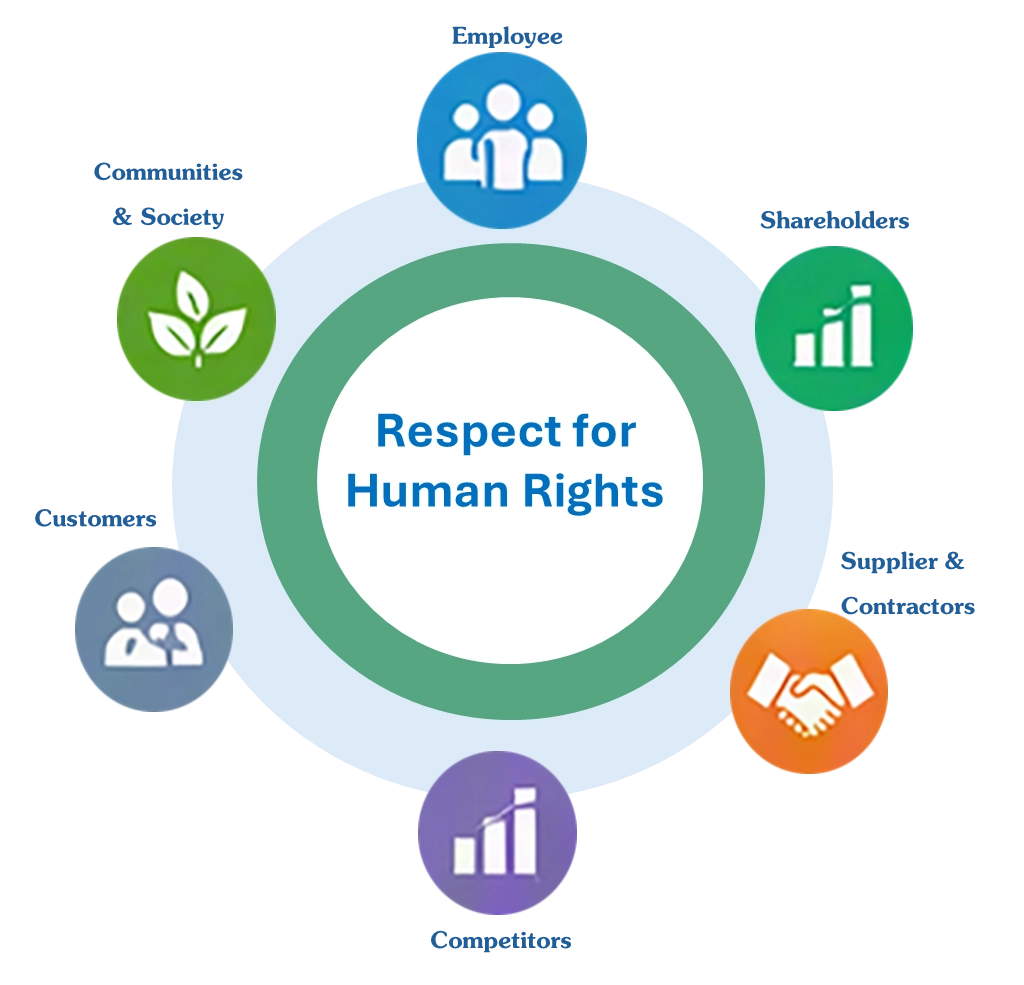
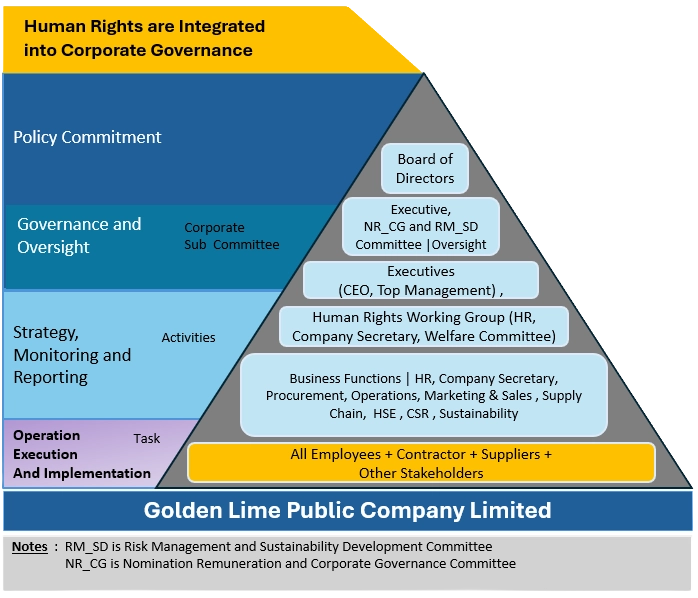
Human Rights Governance Structure
Golden Lime Public Company Limited and Subsidiary establishes a governance structure to support the effective implementation of its human rights commitments and policies by integrating human rights considerations into its risk management, business operations and sustainability governance processes.
Relevant functions are responsible for identifying, assessing and monitoring human rights risks, establishing preventive and mitigation measures, tracking relevant indicators and performance, and reporting significant matters to management and the relevant governance bodies based on the significance of the risks.
Significant human rights risks are integrated into the Company’s enterprise risk management process, where appropriate, to consider potential impacts on stakeholders, business operations, reputation, regulatory compliance and business continuity, and to determine appropriate management responses.
SUTHA periodically reviews its Human Rights Policy and related practices, taking into consideration changes in human rights risks, applicable laws and standards, stakeholder concerns and performance monitoring results to ensure that its approach remains relevant and appropriate to the Company’s business context.
Management and relevant governance bodies monitor human rights performance and risks in accordance with the Company’s risk management cycle. Significant matters and overall performance are reported to the relevant Board-level governance body at least annually, with additional reporting when significant human rights incidents or risks arise.
Management Perspective
“Profit drives growth, respect for people creates sustainability. We are committed to building a safe,
fair, and inclusive workplace where everyone could equally thrive. Sustainable success comes from growing together””

Mr. Sathish Kumar Pushparaj
Managing Director Chairman of Executive Committee and
Chairman of Risk Management and Sustainability Development Committee
For more details, please visit
Human Rights Due Diligence (HRDD)
Human Rights Due Diligence (HRDD)
“Respecting Human Rights for a Sustainable Future”
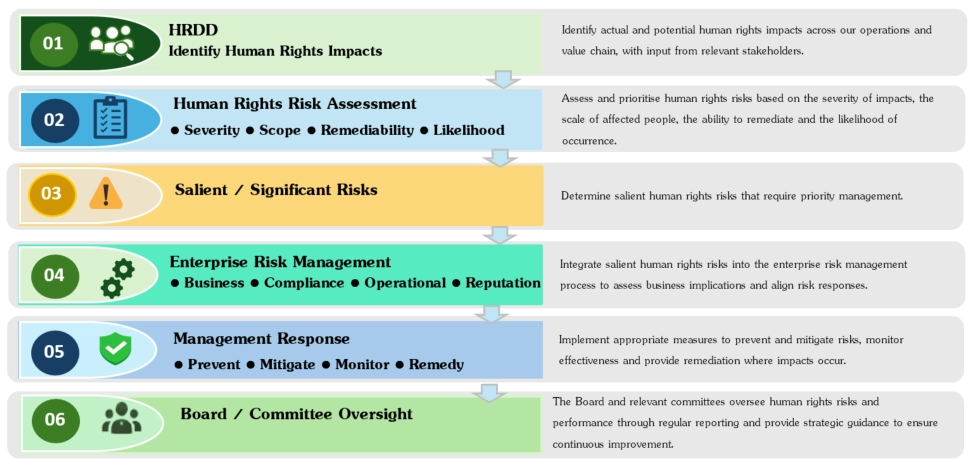
SUTHA conducts Human Rights Due Diligence (HRDD) by applying the United Nations Guiding Principles on Business and Human Rights (UNGPs) to identify and assess significant human rights impacts across the Group’s business value chain, and to establish appropriate preventive and mitigation measures to minimize potential adverse impacts.
RESPECT FOR HUMAN RIGHTS FOR A SUSTAINABLE FUTURE
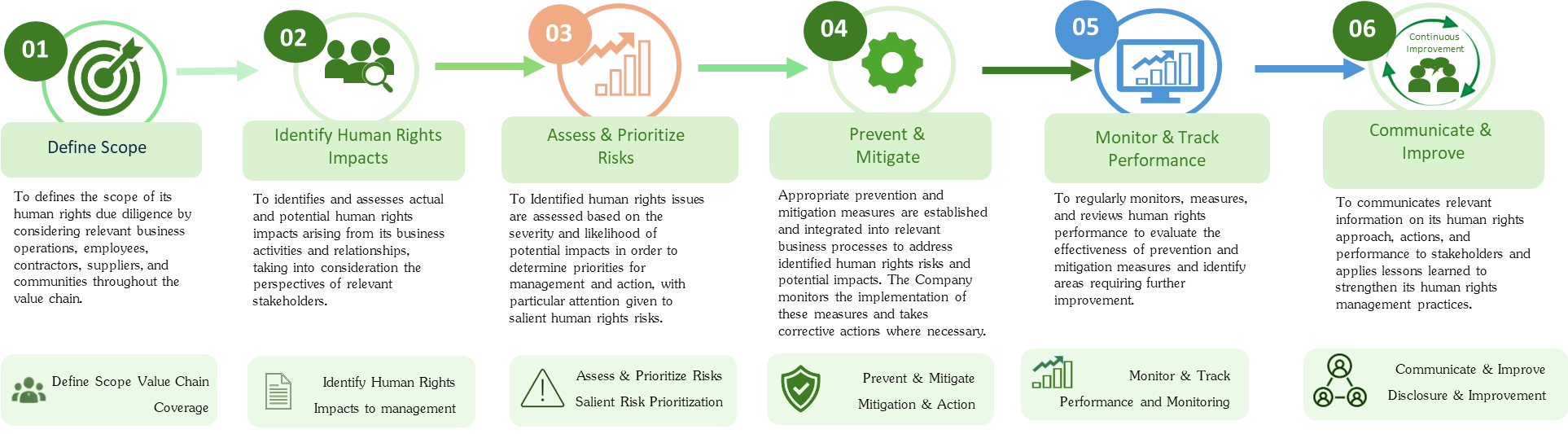
Human rights risks assessed as significant or high priority, including incidents that may result in severe impacts on stakeholders, are escalated to the appropriate level of management and relevant governance bodies based on the severity and significance of the issue. Appropriate preventive, mitigation, corrective or remedial measures are established and monitored until the risks or impacts have been appropriately addressed.
Human Rights Risk Management
Human Rights Risk Management
“From Assessment to Continuous Improvement”
The Company assesses human rights risks as part of its Human Rights Due Diligence (HRDD) process, considering the severity of impacts, the scale or number of people potentially affected, and the likelihood of occurrence. The assessment enables the Company to identify and prioritize key human rights issues and establish appropriate measures to prevent, mitigate, and continuously monitor potential impacts.
SUTHA integrates human rights considerations into its risk management and business operations in a systematic manner, from identifying potential impacts and assessing and prioritizing significant risks to establishing preventive, mitigation, monitoring and remediation measures. Significant human rights risks are linked, where appropriate, to the Company’s enterprise risk management process, with oversight and monitoring by management and relevant governance bodies to support continuous improvement and responsible business practices.
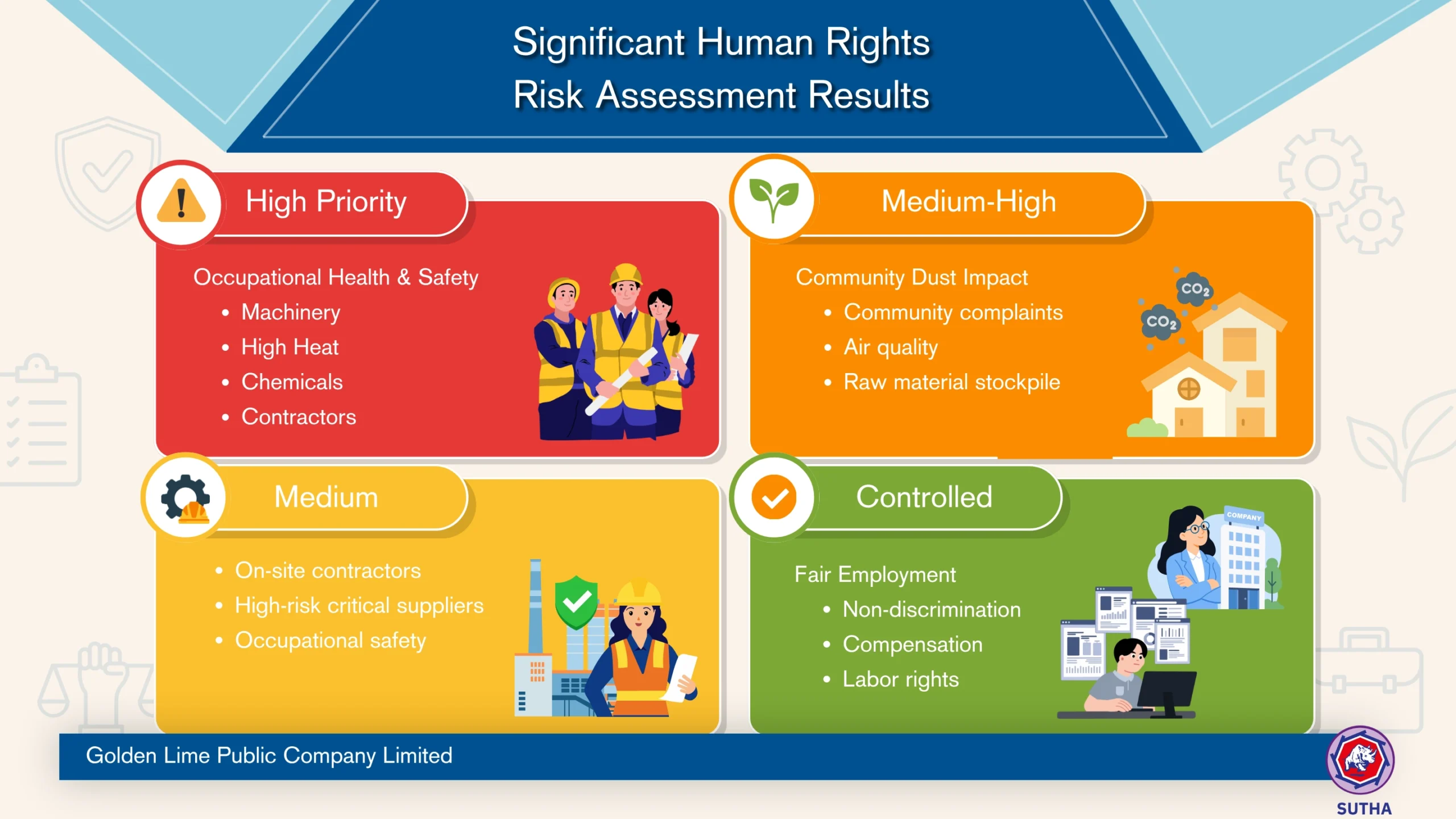
SUTHA assesses human rights risks through its Human Rights Due Diligence (HRDD) process, taking into consideration inherent risks associated with the nature of its business activities and operational processes, as well as the severity of impacts, the scope or number of people potentially affected, and the likelihood of occurrence. The assessment results are used to prioritize human rights risks into four levels as follows.
HIGH PRIORITY
Occupational Health and Safety
Occupational Health and Safety is identified as a high-priority human rights risk. Key risks include machinery-related hazards, high-temperature processes, the handling and transportation of raw materials and products,
as well as the safety of employees and contractors working at the Company’s sites.
- Establishing key safety indicators as corporate KPIs and regularly monitoring safety performance.
- Assigning occupational safety personnel at relevant sites to oversee and support workplace safety risk management.
- Managing occupational health and safety in accordance with ISO 45001.
- Providing ongoing safety training and capability development for employees and relevant personnel.
- Promoting programs and activities that strengthen a safety culture and raise awareness of accident prevention.
- Investigating and analyzing incidents and their root causes, recording events through the “Health and Safety Event Reporting” application, communicating lessons learned, and implementing measures to prevent recurrence.
- Evaluating and reporting safety performance to monitor the effectiveness of measures and support continuous improvement.
Community Dust Impact
The impact of particulate matter on the community.
The storage and stockpiling of raw materials, as well as the handling and transportation of raw materials and products, may generate dust emissions that could affect air quality in surrounding communities. SUTHA therefore implements preventive and mitigation measures and continuously monitors their effectiveness to minimize community impacts and respond appropriately to community concerns and grievances.
as well as the safety of employees and contractors working at the Company’s sites.
Prevention and Impact Mitigation Measures
- Control dust at its source and at material transfer points. Install dust collection systems in areas where water spraying or covering alone is insufficient. Additionally, improve the sealing of material transfer points, minimize the drop height of materials, and utilize skirts or seals to contain dust dispersion. Conveyor dust control strategies should integrate enclosures, sealing, engineered transfer points, and dust collection systems.
- Establish green belts (vegetative barriers) in appropriate locations to help reduce the spread of dust to surrounding areas.
- Regulate the height and management of raw material stockpiles to minimize the risk of dust becoming airborne due to wind.
- Install dust suppression systems (water spray systems) around raw material stockpiles and other areas prone to dust generation.
- Install covers or enclosures over conveyor belts—particularly at material receiving, discharge, or transfer points—to prevent dust from dispersing during the transport process.
- Install truck-wheel washing systems at site exits to prevent the tracking of dust and debris outside the premises.
- Monitor dust levels and air quality in relevant areas to evaluate the effectiveness of control measures and assess potential impacts on the surrounding community.
- Conduct environmental control audits at least twice a year to ensure compliance with established measures and use the findings to continuously improve control systems.
- Manage the receipt and transport of raw materials by implementing specific protocols for trucks entering and leaving the site, including defined operational guidelines and designated timeframes for material delivery. ...and the number of daily transport trips, in order to manage traffic and transport activities under controlled conditions, while minimizing potential impacts on the surrounding community.
- Monitor and manage community complaints by analyzing the root causes, establishing corrective measures, and conducting follow-ups to prevent recurrence.
- Integrate complaint data with environmental impact monitoring, utilizing a systematic process that encompasses receiving complaints, conducting site inspections, identifying sources, monitoring air quality, implementing corrective actions, following up, communicating outcomes, and closing out complaints.
- Enhance surveillance in sensitive areas—specifically locations subject to complaints, areas downwind, factory boundaries near the community, and sensitive transition zones—to monitor risks and prevent the recurrence of impacts.
- Ensure continuous monitoring and improvement by using air quality and environmental monitoring data, alongside community feedback, to evaluate the effectiveness of existing measures. This includes developing solutions and making ongoing improvements to maintain control over dust-related impacts and ensure that conditions in the surrounding areas remain within appropriate levels.
MEDIUM
Contractor management
Contractors working at SUTHA’s sites may be exposed to risks related to occupational health and safety, working conditions and compliance with labor requirements. The Company therefore manages contractor-related risks throughout the contractor lifecycle, from selection and pre-work preparation to on-site supervision, monitoring and performance evaluation, with the aim of promoting safe and fair working practices.
Management Measures
- Select and evaluate contractors based on their qualifications, capabilities, and compliance with requirements related to labor, occupational health, and safety.
- Establish safety protocols and standards for contractors performing work or providing services within company premises.
- Conduct training and communicate requirements prior to the commencement of work to ensure a clear understanding of relevant risks, mandates, and safety practices.
- Supervise and monitor on-site operations to ensure adherence to the company’s safety requirements and standards.
- Audit and assess compliance, and implement corrective measures whenever non-compliance or risks are identified.
- Track safety-related incidents and contractor performance, using the evaluation results and lessons learned to continuously improve management measures.
CONTROLLED
Fair Employment
SUTHA is committed to respecting labor rights and ensuring fair treatment of employees, covering non-discrimination, wages and remuneration, labor rights and equal opportunity.
Based on the Company’s assessment, no significant risks requiring urgent priority management were identified in this area. Relevant policies and practices are in place to prevent and manage these risks.
Management Measures
- Promote fair employment and fair treatment of employees, with respect for individual rights and dignity.
- Promote non-discrimination and equal opportunity in accordance with the Company’s policies and practices.
- Provide wages and remuneration in accordance with applicable laws and requirements.
- Respect and protect fundamental labor rights in accordance with applicable laws and the Company’s human rights principles.
- Prohibit child labor, forced labor and employment practices that do not comply with applicable laws.
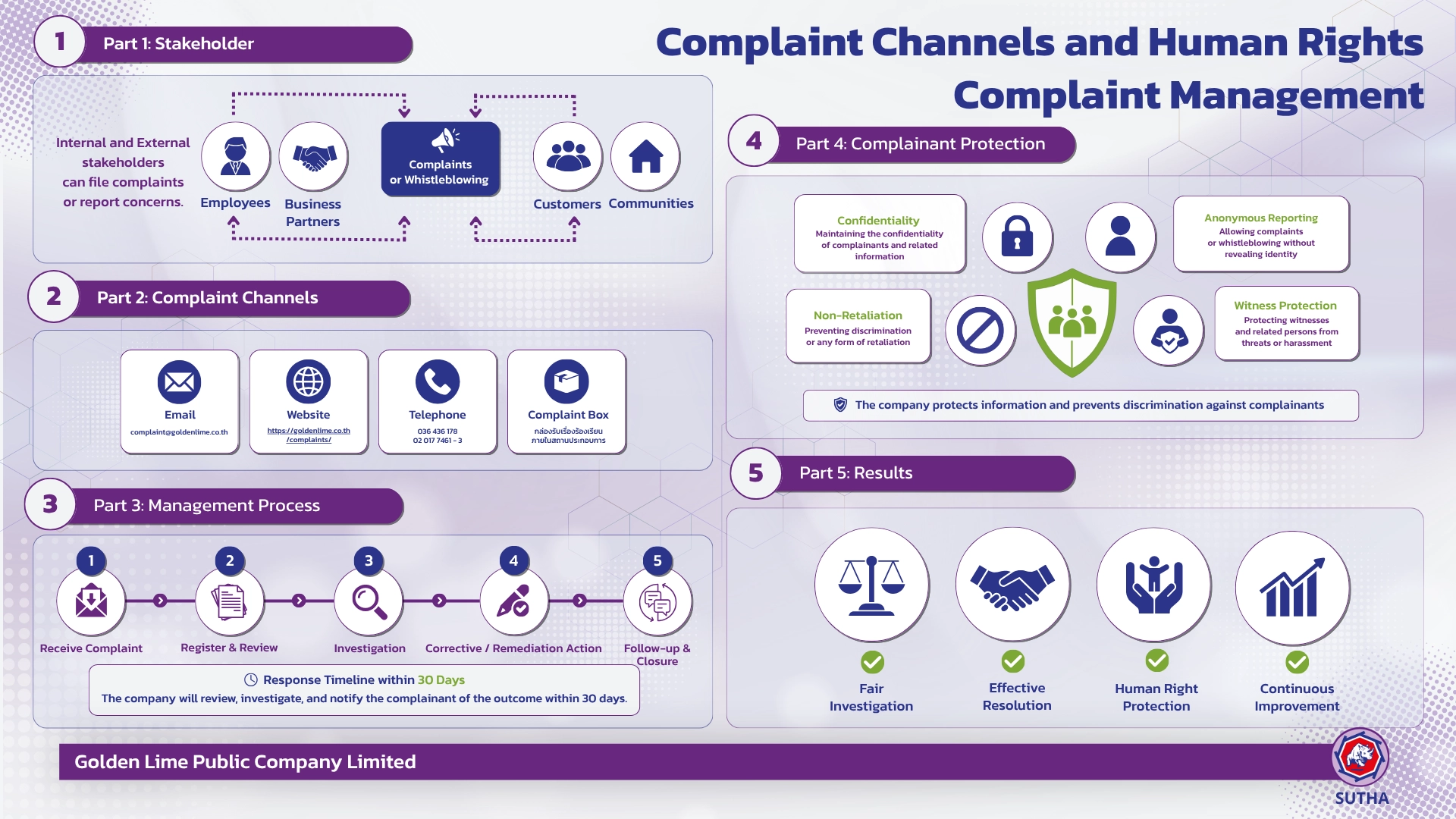
- Provide channels for raising concerns and grievances, with relevant matters reviewed and addressed through the Company’s established processes.
Risk Escalation & Oversight
Human rights risks assessed as significant or high priority, including incidents that may result in severe impacts on stakeholders, are escalated to the appropriate level of management and relevant governance bodies based on the severity and significance of the issue. Appropriate preventive, mitigation, corrective or remedial measures are established and monitored until the risks or impacts have been appropriately addressed.
Human Rights in the Supply Chain
Human Rights in the Supply Chain
“From Assessment to Continuous Improvement”
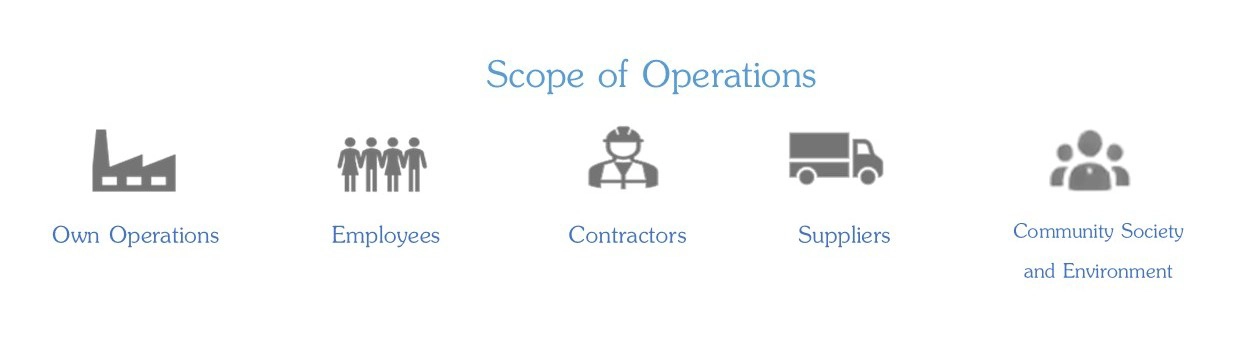
The Company is committed to the concrete implementation of human rights principles by integrating human rights management into its operations—both within the organization and throughout its entire value chain. This encompasses employees, contractors, business partners, and service providers, as well as communities and other stakeholders who may be affected by the Company’s business activities.
The Company utilizes findings from its human rights due diligence (HRDD) process and risk assessments to establish measures for preventing, mitigating, monitoring, and addressing or remedying impacts. In doing so, it prioritizes issues and stakeholder groups that face higher risks or are susceptible to significant adverse impacts.
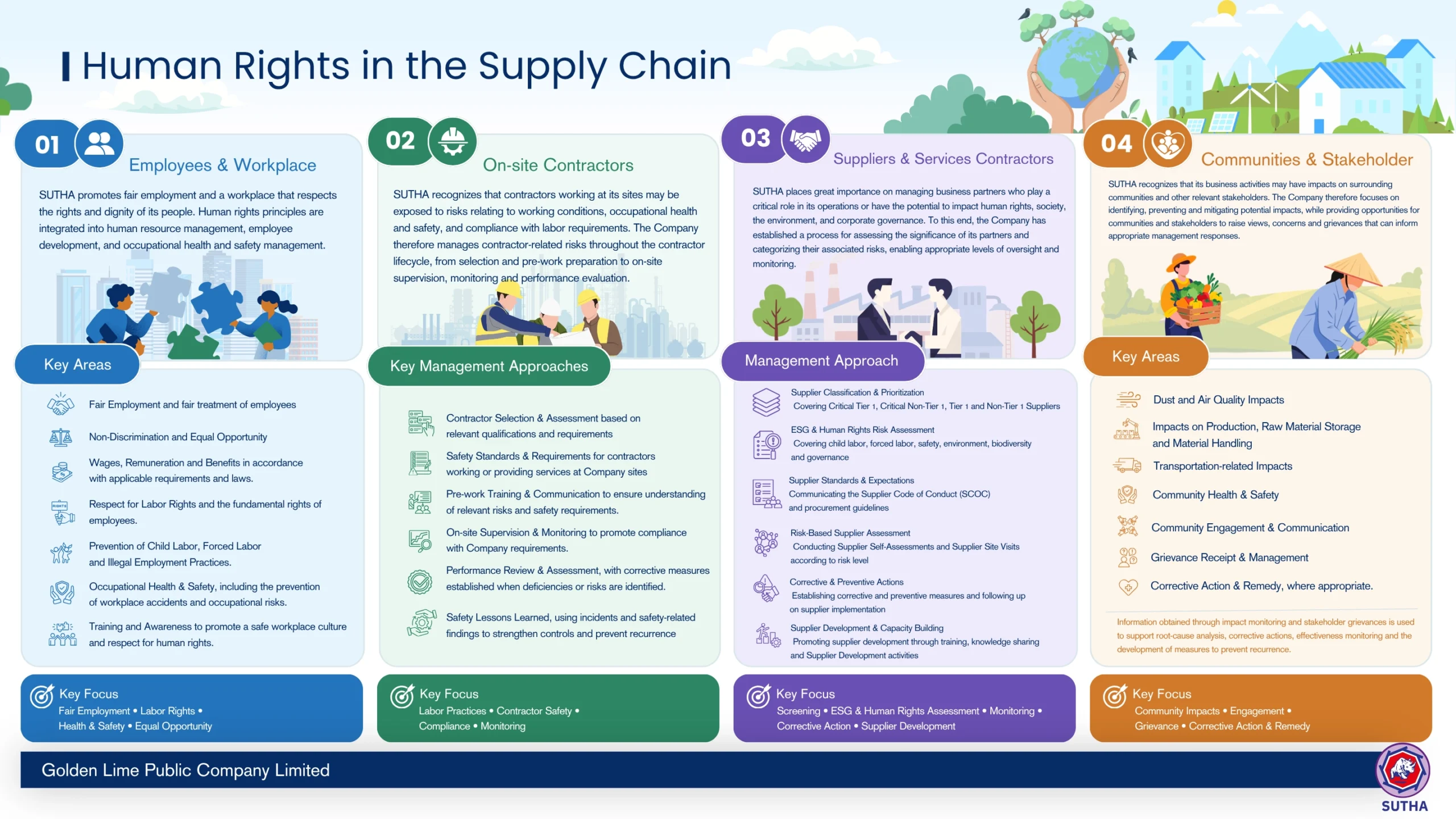
SUTHA assesses human rights risks through its Human Rights Due Diligence (HRDD) process, taking into consideration inherent risks associated with the nature of its business activities and operational processes, as well as the severity of impacts, the scope or number of people potentially affected, and the likelihood of occurrence. The assessment results are used to prioritize human rights risks into four levels as follows.
01 OUR PEOPLE
Employees & Workplace
SUTHA promotes fair employment and a workplace that respects the rights and dignity of its people. Human rights principles are integrated into human resource management, employee development, and occupational health and safety management.
as well as the safety of employees and contractors working at the Company’s sites.
Key Areas
- Fair Employment and fair treatment of employees.
- Non-Discrimination and Equal Opportunity.
- Wages, Remuneration and Benefits in accordance with applicable requirements and laws.
- Respect for Labor Rights and the fundamental rights of employees.
- Prevention of Child Labor, Forced Labor and Illegal Employment Practices.
- Occupational Health & Safety, including the prevention of workplace accidents and occupational risks.
- Training and Awareness to promote a safe workplace culture and respect for human rights.
Focus: Fair employment • Labor rights • Health and safety • Equal opportunity
02 CONTRACTORS
On-site Contractors
SUTHA recognizes that contractors working at its sites may be exposed to risks relating to working conditions, occupational health and safety, and compliance with labor requirements. The Company therefore manages contractor-related risks throughout the contractor lifecycle, from selection and pre-work preparation to on-site supervision, monitoring and performance evaluation.
as well as the safety of employees and contractors working at the Company’s sites.
Key Management Approaches
- Contractor Selection & Assessment based on relevant qualifications and requirements.
- Safety Standards & Requirements for contractors working or providing services at Company sites.
- Pre-work Training & Communication to ensure understanding of relevant risks and safety requirements.
- On-site Supervision & Monitoring to promote compliance with Company requirements.
- Performance Review & Assessment, with corrective measures established when deficiencies or risks are identified.
- Safety Lessons Learned, using incidents and safety-related findings to strengthen controls and prevent recurrence.
Key Focus : Labor Practices • Contractor Safety • Compliance • Monitoring | Contractors Working On-Site
03 Suppliers and Services Contractors
SUTHA places great importance on managing business partners who play a critical role in its operations or have the potential to impact human rights, society, the environment, and corporate governance. To this end, the company has established a process for assessing the significance of its partners and categorizing their associated risks. This enables the implementation of oversight and monitoring measures tailored to the specific nature and risk level of each partner group.
The assessment process considers various relevant factors, such as the type of goods or services provided, procurement value, importance to business continuity, the nature and location of operations, and ESG-related risks. These include issues concerning human rights and labor, occupational health and safety, the environment and biodiversity, as well as corporate governance and business ethics.
Management Approach
- Supplier Classification & Prioritization
SUTHA classifies suppliers according to their business significance and relationship, including Critical Tier 1 Suppliers, Critical Non-Tier 1 Suppliers, Tier 1 Suppliers and Non-Tier 1 Suppliers, to determine appropriate levels of assessment and monitoring. - ESG & Human Rights Risk Assessment
คู่ค้าได้รับการประเมินตามปัจจัยความเสี่ยงที่เกี่ยวข้องกับลักษณะสินค้าและบริการ รวมถึงประเด็นด้าน สิทธิมนุษยชน แรงงานเด็ก แรงงานบังคับ ความปลอดภัย สิ่งแวดล้อม ความหลากหลายทางชีวภาพ และธรรมาภิบาล เพื่อระบุคู่ค้าที่ควรได้รับการติดตามเพิ่มเติม - Supplier Standards & Expectations
SUTHA communicates its Supplier Code of Conduct (SCOC) and relevant procurement guidelines to suppliers to promote ethical business practices, social and environmental responsibility, and alignment with the Company's human rights principles. - Risk-Based Supplier Assessment
For critical suppliers or suppliers requiring additional monitoring, the Company may conduct Supplier Self-Assessments and Supplier Site Visits involving relevant functions, such as Engineering, Safety, Geology, Maintenance or other relevant assessors, to evaluate supplier practices and identify potential risks. - Corrective & Preventive Actions
Where deficiencies or risk issues are identified, the Company establishes a Corrective and Preventive Action Plan and follows up on supplier implementation to address root causes, reduce risks and prevent recurrence. - Supplier Development & Capacity Building
SUTHA promotes supplier development through training, knowledge sharing and Supplier Development activities covering safety, human rights, labor laws, environmental management, biodiversity, anti-corruption and sustainability practices, supporting continuous improvement and responsible business practices across the value chain.
04 COMMUNITIES & STAKEHOLDERS
SUTHA recognizes that its business activities may have impacts on surrounding communities and other relevant stakeholders. The Company therefore focuses on identifying, preventing and mitigating potential impacts, while providing opportunities for communities and stakeholders to raise views, concerns and grievances that can inform appropriate management responses.
Key Areas
- Dust and Air Quality Impacts
- Impacts on Production, Raw Material Storage and Material Handling
- Transportation-related Impacts
- Community Health & Safety
- Community Engagement & Communication
- Grievance Receipt & Management
- Corrective Action & Remedy, where appropriate.
Information obtained through impact monitoring and stakeholder grievances is used to support root-cause analysis, corrective actions, effectiveness monitoring and the development of measures to prevent recurrence.
Key Focus: Community Impacts • Engagement • Grievance • Corrective Action & Remedy ผลกระทบต่อชุมชน • การมีส่วนร่วม • ข้อร้องเรียน • การแก้ไขและเยียวยา
Grievance & Remediation Mechanisms
Grievance & Remediation Mechanisms
Human Rights Performance
Human Rights Performance
Activities to Promote Human Rights

Business Operations Aligned with the National Action Plan on Business and Human Rights (NAP)

Labor Rights | Employees
- Fair employment
- No child labor or forced labor
- Employee participation
- Human rights status monitoring
- Complaint management

Community and Environment
- Stakeholder participation
- Public consultation
- Environment and biodiversity, community remediation

Rights Protection and Access to Remedy
- Whistleblower protection
- Access to remedy process
- Human rights training
- Transparency and disclosure
Results
Grievances on human rights
0
Rights Protection and Access to Remedy
100%
All grievances investigated
100%
No disputes found related to human rights
0
Employee
- Employee participation 97%
- Compliance training attendance 100%
Supply chain
- Covered all Critical Tier 1 suppliers 100%
- New supplier evaluation completed 100%
SAFETY Zero LTI
0 LTI
Access to remedy process
- Complaint resolution closed 100%
- No cases escalated continuously
KEY COMMITMENTS
• Human Rights Policy • Human Rights Due Diligence (HRDD) • Grievance & Remedy
• Stakeholder Engagement • ESG & Sustainable Development